

The way your feet move and function plays a vital role in your overall comfort, mobility and health. Two common conditions that can affect foot mechanics are flat feet and high arches. Both can cause discomfort and, if left unmanaged, may contribute to problems with the ankles, knees, hips or even the lower back.
In this blog, we explain what podiatry biomechanics is, how flat feet and high arches affect the body, and how orthotic inserts can provide effective support.
What is Podiatry Biomechanics?
Biomechanics is the study of how the body moves. In podiatry, it focuses on the structure, function and motion of the foot and lower limb. Proper foot biomechanics are essential for:
- Balance and stability
- Absorbing shock when walking or running
- Efficient, pain-free movement
When biomechanics are altered – as in cases of flat feet or high arches – discomfort and strain can develop.
Flat Feet (Pes Planus)
What happens?
Flat feet occur when the arch of the foot collapses, so the sole rests flat against the ground.
Causes:
- Genetics
- Ageing
- Injury
- Conditions such as arthritis
Effects:
Flat feet can lead to pain in the feet, ankles, knees or lower back due to changes in alignment and weight distribution.
Orthotic solutions:
- Custom or specialist insoles to support the arch
- Supportive footwear to reduce pressure on the feet
- Strengthening and stretching exercises to improve function
High Arches (Pes Cavus)
What happens?
High arches create an exaggerated curve in the midfoot. This means more pressure is placed on the heel and ball of the foot.
Causes:
- Genetic factors
- Muscle imbalance
- Neurological conditions
Effects:
High arches can reduce stability, make shoe fitting difficult, and increase the risk of pain, calluses or injuries.
Orthotic solutions:
- Custom insoles to redistribute pressure evenly
- Footwear with additional cushioning for shock absorption
- Support to improve balance and comfort
When to See a Podiatrist
If you experience:
- Persistent foot pain
- Difficulty walking or running comfortably
- Recurrent injuries
- Signs of strain in your ankles, knees, hips or lower back
…it may be time to seek help from a podiatrist.
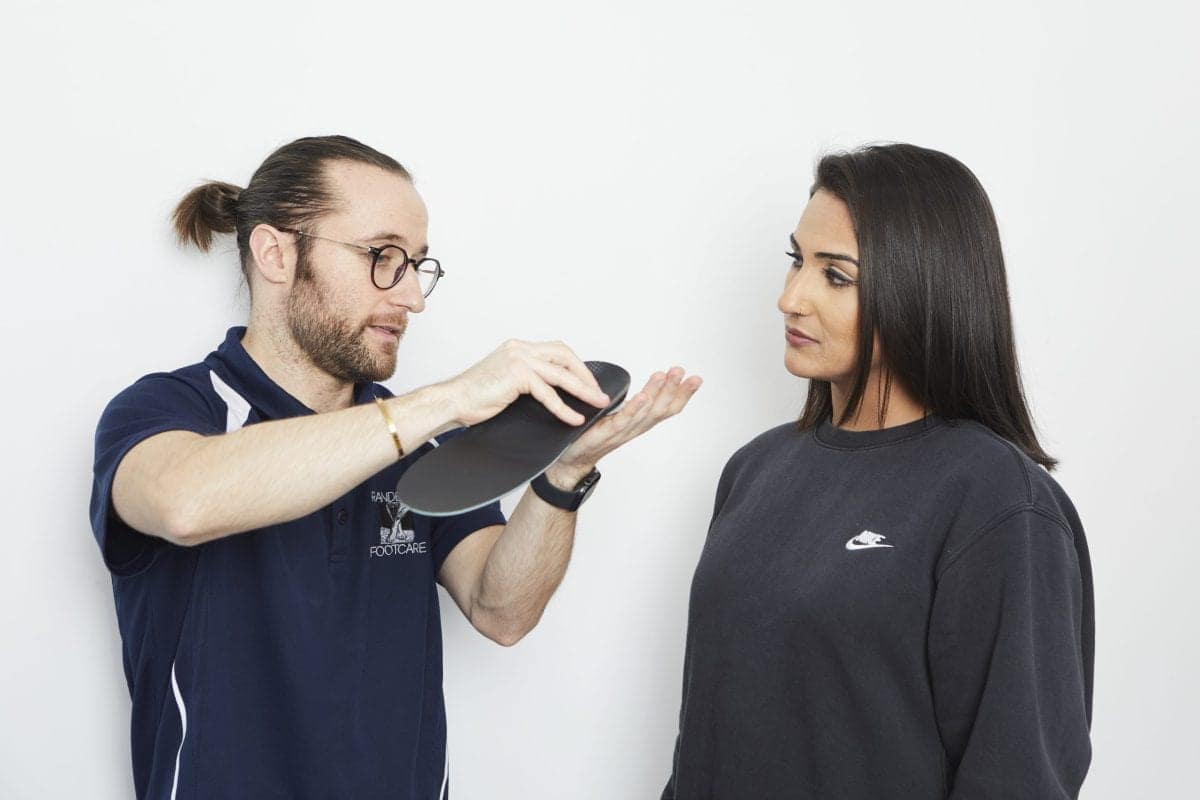
A biomechanical assessment can identify whether flat feet or high arches are affecting your movement. Based on the results, your podiatrist may recommend custom orthotic inserts tailored to your needs, alongside practical advice on footwear and exercises.
Takeaway
Flat feet and high arches are common conditions, but they do not have to hold you back. With the right biomechanical assessment and orthotic support, you can:
- Improve comfort and mobility
- Prevent ongoing strain and pain
- Support your long-term foot health
👣 Don’t let foot pain affect your daily life. Book your biomechanical assessment today and find out how orthotic inserts can make a difference.
