
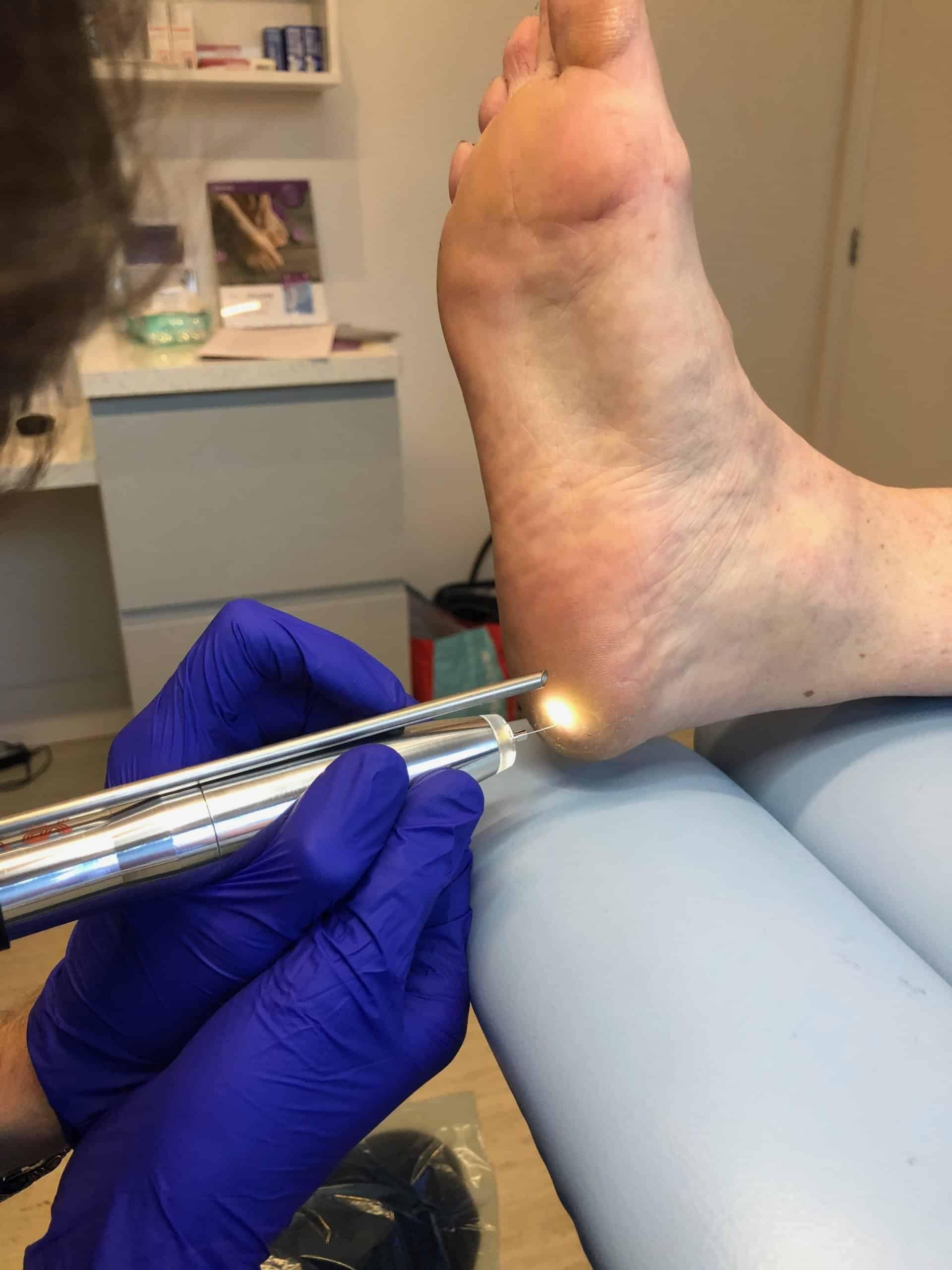


Verrucae are a very common foot condition that affect both children and adults. While some verrucae disappear on their own, others can become painful, spread, or persist for months or even years.
At Randell’s Footcare, we regularly help patients manage and treat verrucae, particularly when they become uncomfortable or start affecting daily activities.
What Is a Verruca?
A verruca is a type of wart that develops on the foot. Verrucae are caused by the human papillomavirus (HPV), which infects the outer layer of the skin.
Because they occur on weight-bearing areas of the feet, such as the heel or ball of the foot, verrucae are often pushed inward by pressure from standing and walking.
They can appear as:
- Small rough growths on the skin
- Areas of hard skin with tiny black dots
- Flat lesions on pressure areas of the foot
- Single verrucae or clusters known as mosaic verrucae
The small black dots often seen within a verruca are tiny blood vessels rather than dirt.
How Do Verrucae Spread?
The virus that causes verrucae thrives in warm, moist environments. This means verrucae are commonly spread in places such as:
- Swimming pools
- Communal changing rooms
- Gym showers
- Shared barefoot areas
The virus enters the skin through tiny cuts or weakened areas of skin. Not everyone exposed to the virus will develop a verruca, as immune systems respond differently from person to person.
Are Verrucae Painful?
Some verrucae cause no symptoms at all, while others can become painful, especially if they develop on pressure areas of the foot. Patients often describe:
- Pain when walking
- Discomfort when standing
- Feeling as though they are walking on a stone
- Tenderness when pressure is applied from side to side
Pain may increase during sport, running, or long periods on the feet.
Do Verrucae Go Away on Their Own?
In some cases, verrucae will eventually resolve without treatment as the immune system recognises and clears the virus. However, this can take months or even years.
Some verrucae persist for long periods, spread to other areas of the foot, or become increasingly uncomfortable. In these cases, professional treatment may help speed up resolution and reduce symptoms.
Common Verruca Treatments
There is no single treatment that works for every verruca. Treatment success can depend on:
- Age
- Immune response
- Size and duration of the verruca
- Activity levels
- Previous treatments
At Randell’s Footcare, treatment plans are tailored to the individual.
Conservative Management
Some verrucae may simply be monitored, particularly if they are painless and not spreading. Keeping the feet clean and dry, avoiding picking the verruca, and wearing footwear in communal areas can help reduce spread.
Topical Treatments
Over-the-counter verruca treatments often contain salicylic acid, which works by gradually breaking down infected skin. These treatments can sometimes be effective but usually require consistency over several weeks or months.
Cryotherapy
Cryotherapy involves freezing the verruca tissue. Some patients respond well to this treatment, although multiple sessions may be required.
Heatshock Therapy
For stubborn verrucae, heatchock therapy may sometimes be considered. This procedure aims to stimulate an immune response to the virus through a mixture of cryotherapy and plasma treatment.
Swift Microwave Therapy
Swift is a newer treatment option that uses microwave energy to target the verruca tissue and stimulate the body’s immune response.
It is often considered for persistent or painful verrucae that have not responded to other treatments.
Can You Prevent Verrucae?
While it is not always possible to completely prevent verrucae, some simple steps may help reduce the risk:
- Wear flip flops in communal changing areas
- Avoid sharing towels or footwear
- Keep feet clean and dry
- Avoid picking verrucae
- Cover verrucae during swimming where appropriate
When Should You Seek Professional Advice?
It is worth seeking professional advice if:
- The verruca is painful
- It is spreading
- Home treatments are not working
- You are unsure whether it is a verruca
- The lesion changes appearance
- You have diabetes or circulation problems
Some skin lesions can appear similar to verrucae, so assessment is important if you are uncertain about the diagnosis.
How Randell’s Footcare Can Help
At Randell’s Footcare, our podiatrists can assess verrucae, confirm the diagnosis, and discuss the most appropriate treatment options based on your symptoms and lifestyle.
Whether your verruca is recent, painful, or something you have been struggling with for years, our team is here to help.
Call our friendly team on 01603 737188 or book online 24/7 through our website.
