

When we think about foot problems, we often focus on pain in the feet themselves. However, your feet are the foundation of your entire body, and problems with foot structure, movement, or alignment can have a much wider impact – affecting your ankles, knees, hips, and even your lower back.
At Randell’s Footcare, we regularly see patients who initially come to us with knee, hip, or back discomfort, only to discover that the underlying cause may be linked to the way their feet function.
Understanding the connection between your feet and the rest of your body can help you address the cause of your discomfort rather than simply managing the symptoms.
Your feet are the foundation of your movement
Every step you take creates a chain reaction through your body. The way your foot lands on the ground, absorbs impact, and pushes you forwards influences how your ankles, knees, hips, and spine move.
A healthy foot should adapt to different surfaces, provide stability, and distribute forces effectively. However, changes in foot mechanics can alter the way your body moves. For example:
- A foot that rolls excessively inwards (overpronation) can cause the lower leg to rotate internally.
- A stiff or high-arched foot may struggle to absorb shock effectively.
- Differences in foot function between your left and right sides can create imbalances throughout your posture.
Over time, these changes can place additional stress on joints and muscles further up the body.
How foot problems can contribute to knee pain
The knee relies on correct alignment between the foot, ankle, and hip to function efficiently. When your foot position changes, it can affect the rotation and tracking of your knee joint. For example, excessive inward rolling of the foot can cause the shin bone to rotate, potentially increasing stress around the kneecap and surrounding tissues.
Some common conditions where foot mechanics may play a role include:
Patellofemoral pain syndrome (runner’s knee)
Pain around or behind the kneecap is common among runners and active individuals. Poor foot mechanics can contribute by altering the movement of the leg during walking, running, or exercise.
Iliotibial band syndrome
This condition often causes pain on the outside of the knee. Changes in lower limb alignment, including issues originating from the foot, may increase tension through the iliotibial band.
Knee osteoarthritis
While arthritis is a complex condition influenced by many factors, altered walking patterns caused by foot problems can increase loading through certain areas of the knee joint.
The link between your feet and hip pain
Your hips help control the movement and stability of your entire lower body. If your feet are not functioning efficiently, your hips may have to compensate.
For example, if one foot collapses more than the other, your pelvis may tilt or rotate slightly with each step. Your hip muscles may then work harder to maintain balance and stability. This can contribute to:
- Hip stiffness
- Muscle fatigue
- Reduced mobility
- Pain around the hip or outer thigh
- Increased strain during walking, running, or exercise
Many people assume hip discomfort is caused purely by the hip joint itself, but movement patterns involving the feet and legs should also be considered.
How foot problems can affect your back
Your feet influence your posture from the ground upwards. Changes in foot position can affect the alignment of your ankles, knees, hips, pelvis, and spine.
For example, if one foot functions differently from the other, your body may compensate by adjusting your posture. Over time, these repeated compensations can contribute to muscle tightness and discomfort, particularly in the lower back. Foot-related factors that may contribute to back problems include:
- Uneven foot function
- Differences in leg loading
- Poor shock absorption
- Changes in walking or running patterns
While not all back pain originates from the feet, assessing your lower limb mechanics can be an important part of understanding the bigger picture.
Common foot problems that can affect your whole body
Several foot conditions can influence how your body moves, including:
Flat feet or fallen arches
A reduced arch height can change how the foot absorbs and transfers forces. In some people, this may contribute to altered lower limb alignment.
Bunions
A bunion changes the structure and function of the big toe joint. Since the big toe plays an important role during push-off when walking, this can affect your gait.
Plantar fasciitis
Pain under the heel can cause people to adjust the way they walk to avoid discomfort. These changes can place extra stress on the knees, hips, and back.
Foot and ankle injuries
Previous injuries, such as ankle sprains, can affect stability and movement patterns long after the initial pain has settled.
Biomechanical problems
Biomechanics refers to how your body moves. Issues with foot posture, walking patterns, muscle strength, or joint mobility can all influence how forces travel through your body.
How a biomechanical assessment can help
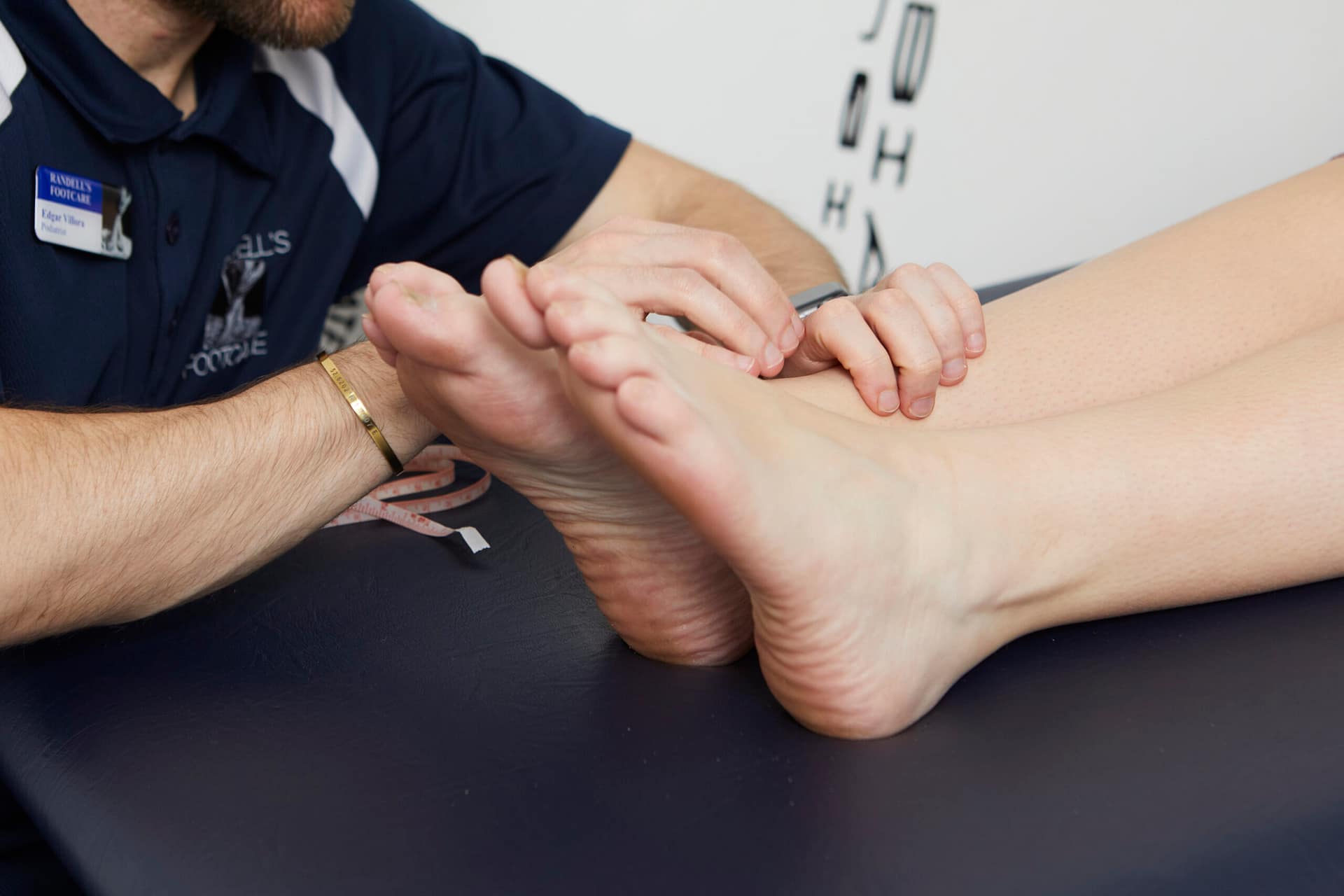
If you are experiencing ongoing knee, hip, or back discomfort, a biomechanical assessment can help identify whether your feet and lower limbs are contributing factors. At Randell’s Footcare, our biomechanical assessments look at:
- Your walking and running pattern
- Foot posture and alignment
- Joint movement
- Muscle strength and flexibility
- Pressure distribution through your feet
- How your lower limbs work together
Using technology such as gait analysis, pressure plate assessment, and slow-motion video, we can gain a clearer understanding of how your body moves.
Where appropriate, we may recommend treatment options such as:
- Advice on footwear
- Strength and mobility exercises
- Activity modification
- Custom-made orthotics
- Referral to physiotherapy when appropriate
Do orthotics help with knee, hip and back pain?
Custom-made orthotics are designed to support and improve the function of your feet. For some patients, improving foot mechanics can help reduce unwanted stresses through the lower limbs.
However, orthotics are not a solution for every problem. The right approach depends on your individual assessment, symptoms, lifestyle, and goals. At Randell’s Footcare, we focus on understanding why a problem is occurring before recommending treatment.
When should you seek advice?
You may benefit from a foot and lower limb assessment if you experience:
- Persistent knee pain without a clear cause
- Hip discomfort during walking or exercise
- Recurrent lower back pain
- Pain that worsens with running or standing
- Uneven wear on your shoes
- Changes in your walking pattern
- Previous foot or ankle injuries
Looking at the bigger picture
Your feet are more than just the structures that carry you around, they are a key part of your overall movement system. Small changes in how your feet function can influence how forces travel through your knees, hips, and back.
By assessing the way your whole lower limb works together, it is often possible to identify contributing factors and create a treatment plan designed around your individual needs.
If you are experiencing foot, knee, hip, or back problems and would like to understand whether your foot function could be contributing, contact Randell’s Footcare to arrange a biomechanical assessment.
Your feet are the foundation of movement – looking after them can help support your whole body.
