

Cycling has been a great choice of physical activity for decades. Social media, community feel, and better infrastructure has only drawn more to the sport. With increased numbers of cyclists, there comes increased shared enthusiasm. This also highlights barriers to progressing or finding enjoyment in the first place. This might be due to discomfort while riding limiting how far you can go, how fast you can travel, and how many benefits you end up reaping in the long-term.
Common injuries while cycling
Discomfort while cycling can range anywhere from a mild annoyance to an injury that affects your daily life off the bike as well. The first injuries that come to mind may be limited to the lower body, however, this is only part of the story. You are likely to have experienced one of the following injuries from this non-exhaustive list because of cycling:
- · Patellofemoral pain syndrome
- · Achilles tendon strains
- · Foot pain, tingling, or numbness
- · Hip pain
- · Muscles cramps
- · Carpal tunnel syndrome
- · Cyclist’s palsy
- · Saddle sores
- · Low back pain
- · Muscle tension around the shoulder blades and neck
- · Tennis or golfer’s elbow
- · Wrist strain
Why bike fitting is important
Bike fitting is more than just making sure you can sit, reach the handlebars, and pedal. Initially, you want to make sure the bike geometry is the right sizing. If it is the wrong size, it won’t matter how many adjustments you make to the bike’s components. Different brands, models, and types will vary in their geometry. It is generally recommended to speak to a bike shop and test ride various frames to get an idea.
Once you have your bike and the initial build put together, you are ready to get on the road or trails! You may start to notice some discomforts we previously covered. If this is the case, you may need to make small adjustments to aspects such as the handlebar position, saddle position, and foot position. These are the first changes you should consider.
These changes are incredibly important for a few reasons:
1. Comfort – time spent off the bike due to pressure areas or injuries is time you can’t regain to improve your health. Clearly, sorting this sooner rather than later is important.
2. Speed – you can optimise how much force you can apply through the pedals depending on your position, anatomy, and physiology. Combining small adjustments alongside a clinical assessment will help you use your muscles more effectively.
3. Safety – you may find that you’re reaching far forward to rest on the handlebars, tiptoeing on the ground to stand, or compromising your handling and turning ability. Making small adjustments to your reach or saddle height can ensure you can brake effectively, put your foot down quickly, and steer appropriately.
Finding a balance with the above points is also necessary. Adjustments to improve one may affect the other. Speaking with someone with experience is therefore highly recommended.
Why a specialist bike fitting is not needed for most cyclists
You may not need an expensive, multiple-hour appointment to make miniscule adjustments and purchase new components to improve your cycling experience. Just as most things in life, covering the basics will resolve nearly all issues you might be exposed to. When the basics are already in place, that is when making detailed measurements and exchanging parts of the bike might be necessary. The basics will normally include asking yourself:
- · Is the bike the right geometry for me in the first place?
- · Have I already had someone adjust my saddle, shoes, pedals, and handlebars?
- · Have I gradually increased my cycling or have I made sudden changes?
- · Do I follow a mobility and strengthening programme?
- · Do I have an adequate recovery after rides and in the wider routine?
- · Are there any injuries that I haven’t fully addressed yet?
What Randell’s Healthcare can offer
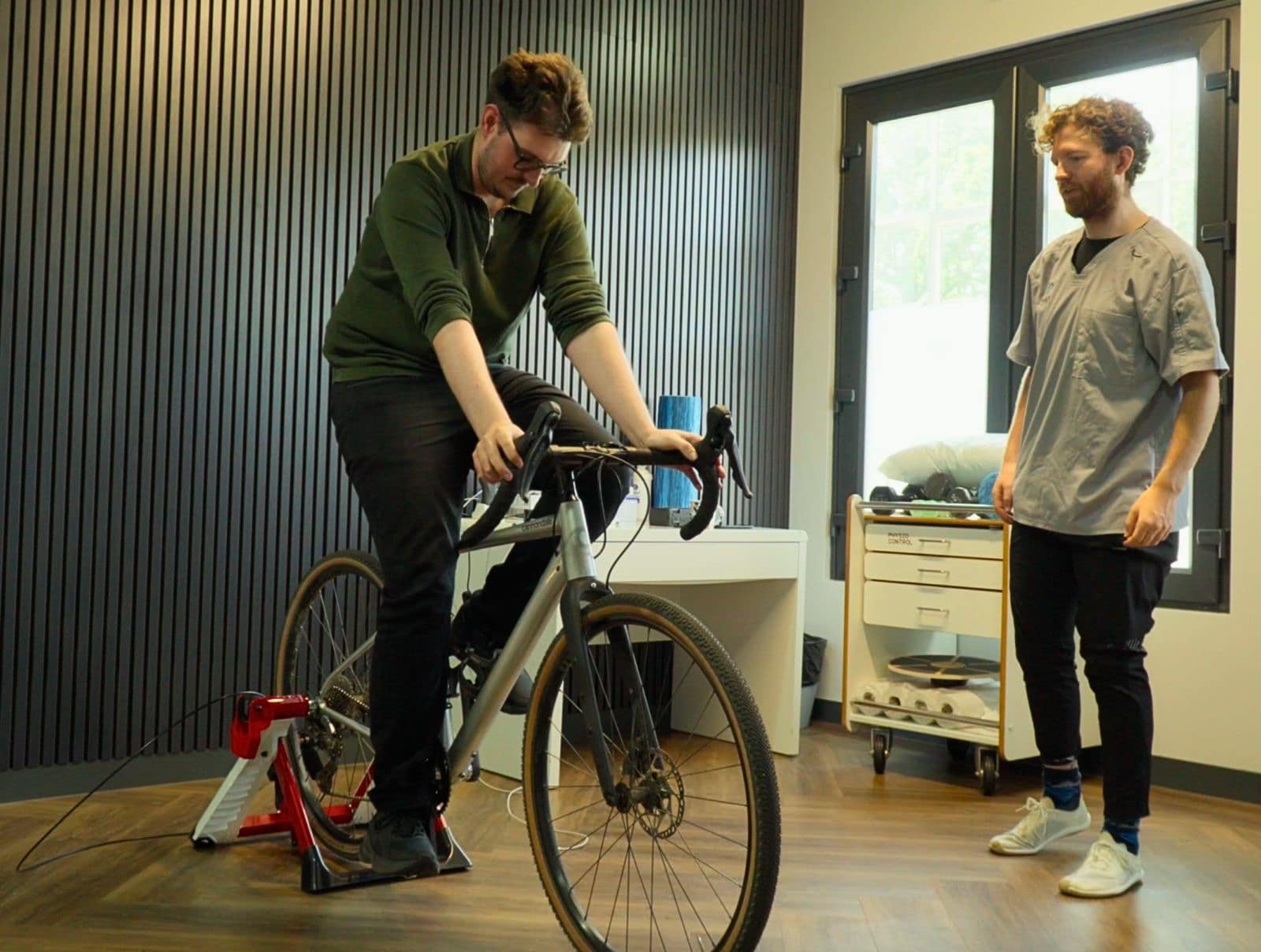
Our physiotherapist heading the bike assessment service has several years of personal experience on the bike, mostly in road, gravel, and time-trials. He is also a musculoskeletal specialist. Bike fitting at shops and factories may include a basic joint and muscle assessment, however, this most likely will lack clinical opinions and advice unless they are qualified as an appropriate healthcare professional. At Randell’s Healthcare, we can delve deep into your health, injuries, movement patterns, and clinical tests to allow us to reason better adjustments for you specifically. The adjustments and recommendations we can make for the bike are almost certainly going
to help immediately, especially when none have been made before, or previous changes were guesswork. We combine the art of bike fitting and science of healthcare.
Book an appointment with our physiotherapist today to complete a musculoskeletal and bike assessment to get your riding more comfortably, faster, and further.
