

If you experience ongoing foot, ankle or lower-limb discomfort, you may have heard of custom orthotics. But what exactly are they, and could they help you?
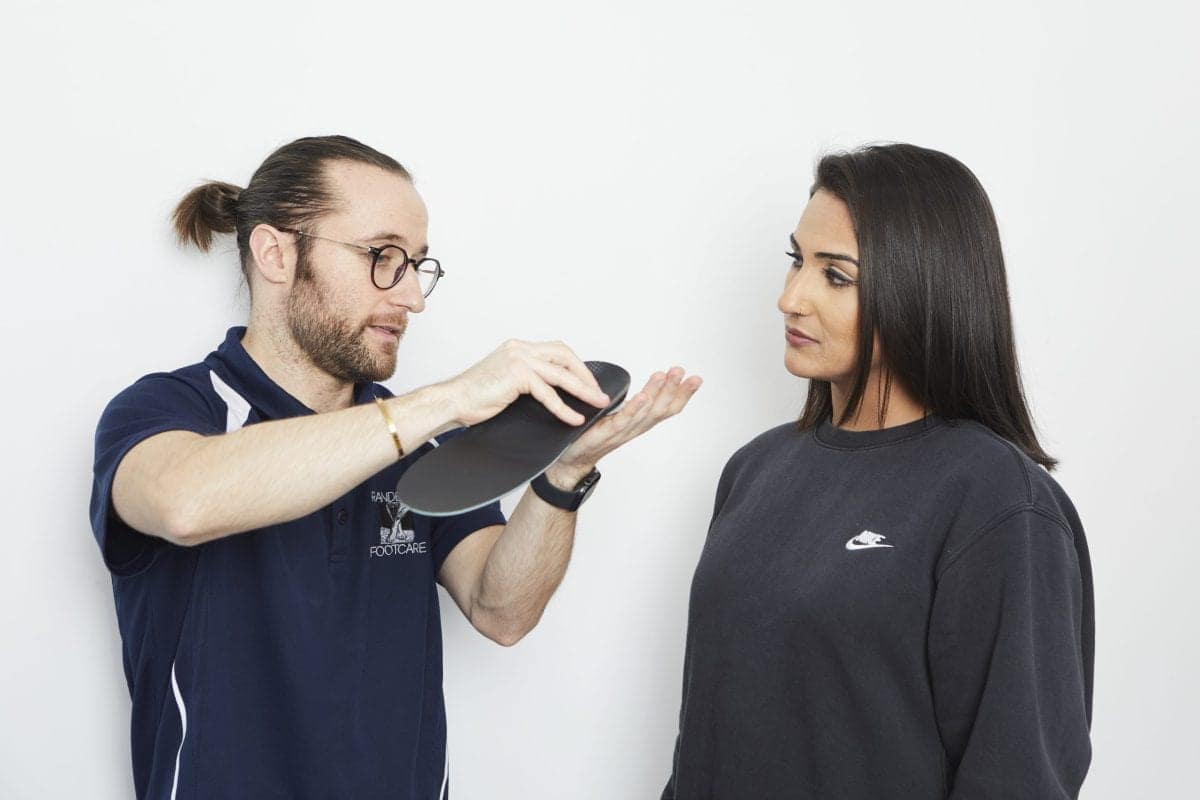
Custom orthotics are individually designed devices that sit inside your footwear. They are designed around your feet, your movement and your specific needs rather than being a one-size-fits-all solution.
At Randell’s Footcare, custom orthotics may form part of a wider treatment plan following a detailed biomechanical assessment.
What are custom orthotics?
Custom orthotics are prescription foot devices designed to support or influence the way your feet function when you stand and move.
Unlike standard insoles bought from a shop, custom orthotics are created using information gathered from your individual assessment. This may include your symptoms, medical history, footwear, foot shape, movement patterns, strength and how your feet interact with the ground.
The aim isn’t simply to add support. Instead, your podiatrist considers what your feet need and whether an orthotic could be beneficial as part of your overall treatment.
What are the potential benefits of custom orthotics?
1. They are designed specifically for you
Everyone’s feet are different. Custom orthotics can be designed around your individual foot shape, symptoms, activities and footwear requirements.
This can be particularly useful when a standard insole doesn’t provide the comfort or function you need.
2. They can help manage foot and lower-limb symptoms
Depending on the cause of your symptoms, orthotics may form part of a treatment plan for problems such as heel pain, arch discomfort, certain biomechanical issues and some sporting injuries.
Your podiatrist will assess whether orthotics are appropriate for your particular presentation rather than automatically recommending them.
3. They can influence how forces are distributed
Every time you walk, run or exercise, your feet experience forces as they interact with the ground.
An appropriately prescribed orthotic can alter how pressure and load are distributed through the foot and lower limb. This may help reduce stress on certain areas in some patients.
4. They can support your activities
Your orthotics should be appropriate for how you use your feet.
Someone who spends most of their day standing at work may have very different requirements from someone who runs several times a week.
During your assessment, your podiatrist can consider your lifestyle, footwear and activities when deciding whether orthotics could be useful.
5. They can form part of a wider treatment plan
Orthotics are rarely the only answer.
Depending on your symptoms, your treatment may also include exercises, strengthening, footwear advice, activity modification, rehabilitation or physiotherapy.
At Randell’s Footcare, our podiatrists can also work alongside our physiotherapy team where a multidisciplinary approach would be beneficial.
Do I need custom orthotics?
Not necessarily.
Having flat feet, high arches or a particular walking pattern does not automatically mean you need orthotics.
The important question is whether your foot function is contributing to your symptoms or affecting your ability to do the things you want to do.
A biomechanical assessment allows your podiatrist to look at your feet and lower-limb function in more detail and determine whether custom orthotics are appropriate for you.
What happens during a biomechanical assessment?
Your assessment will begin with a discussion about your symptoms, medical history, activities and goals. Your podiatrist may then assess:
- Foot and lower-limb alignment
- Joint movement
- Muscle strength
- Walking and running patterns
- Foot function
- Pressure distribution
- Your current footwear
At Randell’s Footcare, our biomechanical assessments can also incorporate technology such as video gait analysis, pressure plate assessment and 3D foot scanning where appropriate.
This information helps your podiatrist build a clearer picture of how you move and whether custom orthotics could form part of your treatment.
Are custom orthotics suitable for everyone?
No. Orthotics aren’t automatically appropriate for every patient or every condition.
There are many reasons why someone may experience foot or lower-limb pain, and the most appropriate treatment depends on the individual.
For some people, exercises, changes to footwear, activity modification or other forms of treatment may be more appropriate. In some cases, orthotics may be one part of a broader treatment programme.
That’s why an individual assessment is important before deciding whether custom orthotics are right for you.
How long do custom orthotics last?
The lifespan of an orthotic depends on factors including the materials used, how frequently they are worn, your activity levels and the demands placed on them.
Regular reviews can help ensure your orthotics remain suitable as your symptoms, activity levels and footwear requirements change.
Could custom orthotics help you?
If you’re experiencing ongoing foot, ankle or lower-limb symptoms, custom orthotics may be worth considering.
At Randell’s Footcare, our podiatrists can assess your individual needs and help determine whether custom orthotics could be beneficial as part of your treatment.
You don’t need to guess whether you need orthotics. Start with an assessment and let us help you understand what’s contributing to your symptoms.
Book a biomechanics assessment with Randell’s Footcare today.
